Carrier 178 Code in West Covina
Fast answer: A Carrier 178 in West Covina, CA (ZIP 91790) is an indoor communication fault, meaning the Infinity control lost its A-B-C-D data link to the indoor board - usually a loose terminal or a cracked attic splice, rarely the board itself - so call (213) 277-6575 or book online and we trace it.
Quick rundown
- Carrier 178 = indoor-unit communication fault on the Infinity A-B-C-D data bus.
- Common in retrofitted South Hills and Woodside Village homes with long attic comm runs.
- First suspects: loose A-B-C-D terminal, corroded splice, chewed thermostat wire - not the board.
- We meter the bus end to end before condemning any control.
- Wiring fix: usually within a $95 to $200 visit. Indoor board: $400 to $2,000.
- Service across 91790, 91791, 91792, 91793 in the eastern San Gabriel Valley.
- Independent shop, not affiliated with Carrier.
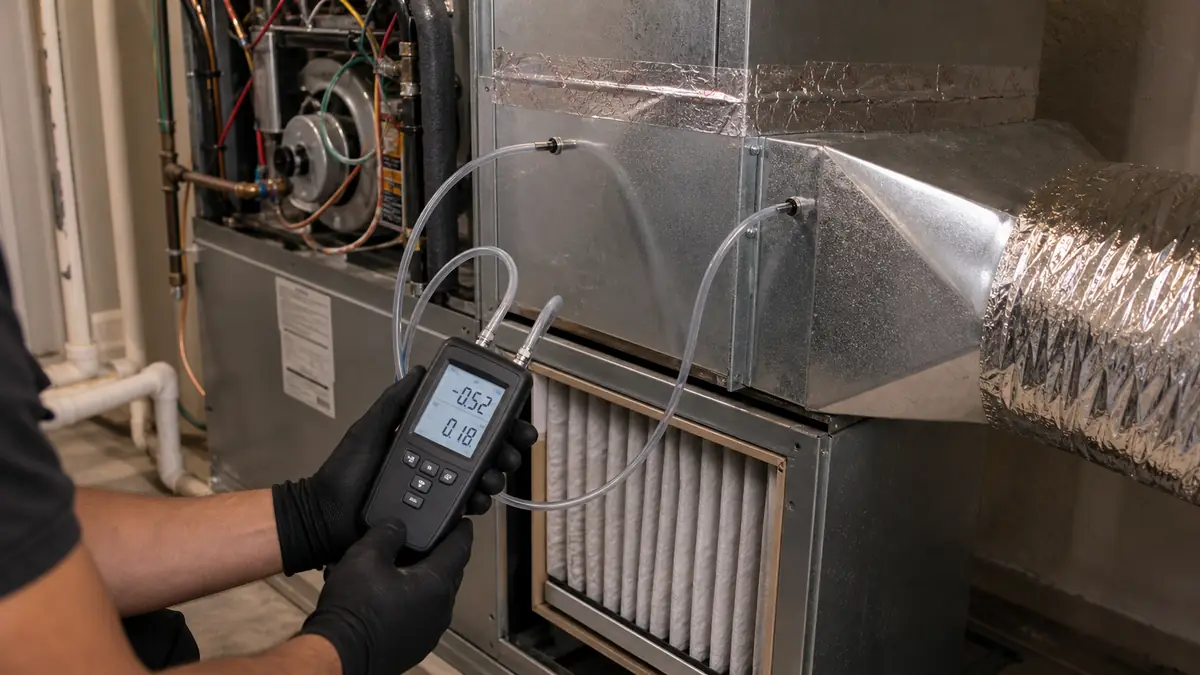
What does a 178 code mean on a Carrier Infinity system?
A Carrier Infinity or Performance system is not wired like an old single-stage furnace. Instead of a separate wire per function, the thermostat, indoor unit, and outdoor unit share a four-conductor data bus labeled A, B, C, and D - C and D carry power and the common, while the system talks across the pair in digital packets. Code 178 means the System Control sent a message to the indoor furnace or air-handler board and got nothing back. The link to the indoor equipment is broken. That break is almost always physical: a terminal that backed out, a splice that corroded, a staple that pinched a conductor, or a rodent that chewed the cable. Less often, the indoor control board itself has failed its communication chip. The system cannot stage the blower or the heat without that conversation, so it shuts down and posts 178 rather than running blind. The fault tells you where the silence is - indoor - which is exactly what separates it from a 179, the outdoor-side version of the same problem.
Why does a 178 happen in West Covina homes specifically?
The pattern here is a retrofit story. West Covina's housing stock is heavy on post-war minimal-traditional and ranch tract homes through Galaxie, Merlinda, and Vincent, plus newer Spanish-style estates up in South Hills. When a communicating Carrier Infinity system gets dropped into one of those older homes, the installer often reuses or extends the existing low-voltage runs - and those runs travel through an attic that hits 130 F on a Zone 9 summer afternoon. Heat cycling dries out wire-nut splices and oxidizes copper at every junction, and the eastern San Gabriel Valley's dry inland air does not help. Over a few seasons a marginal splice in a Woodside Village attic develops an intermittent open: fine on a mild morning, dropping out by mid-afternoon when the conductor expands. That is the classic West Covina 178 - not a dead board, but a tired connection in a hot attic. Add the occasional roof rat in a hillside home and you have the second-most-common cause, a chewed comm cable.
How do you diagnose a Carrier 178, step by step?
We work from the cheapest, most likely cause outward, and we meter rather than guess. The goal is to prove the wiring innocent before anyone orders a control board, because a board ordered to chase a wire is wasted money and a wasted week.
| Step | What we do | Instrument |
|---|---|---|
| 1. Confirm the symptom | Read the active fault on the Infinity System Control; note whether 178 is hard or intermittent | Infinity service menu |
| 2. Power and screen | Verify the wall control is lit and the indoor unit has 24V; a dead screen is a power fault, not a comm fault | Multimeter, 24VAC |
| 3. Inspect terminations | Open indoor unit; check A-B-C-D terminals for loose, backed-out, or corroded leads | Visual, screwdriver |
| 4. Read the bus | Meter resistance and continuity D-to-D and C-to-C end to end; check for shorts between conductors | Multimeter, continuity |
| 5. Hunt the splice | Trace attic and wall junctions; a 130 F West Covina attic dries out and cracks old splices | Attic inspection |
| 6. Condemn the board only last | If wiring is clean end to end, swap-test or meter the indoor control before ordering it | Spare control, meter |
The readings tell the story. With power confirmed at the indoor unit and 24V present, an open between the System Control and the indoor board on the D conductor points straight at a wiring break - we then walk the run, opening attic and wall junctions until the continuity returns at a bad splice. If the bus reads clean end to end and the indoor unit still will not answer, only then do we swap-test or meter the indoor control. That order is the whole job: most 178 faults die at a re-terminated wire long before the board is ever in question.
What can I safely check before calling a pro?
Two checks are safe and genuinely useful. First, confirm the Infinity wall control still has a lit, responsive screen - if it is dark, you have a power or transformer problem, which is a different fault than a communication 178 and worth mentioning when you call. Second, look at any thermostat or comm wire you can see without opening equipment: at the wall plate, where the cable enters the furnace closet, or a visible attic run if you already have safe access. A chewed, pinched, or hanging-loose wire is a real find. Stop there. The A-B-C-D bus carries power, and re-landing those four conductors in the wrong order can damage an indoor board or the System Control - this is not a place to experiment. Do not pull terminals, do not jump conductors, and do not keep power-cycling to force it to run. Note the exact code and the time of day it drops out, since an intermittent 178 that fails in the afternoon heat is a strong clue, and that detail shortens our visit.
What does a 178 fix cost, and when is it urgent?
Cost tracks the cause. The large majority of 178 calls end at the wiring - a re-terminated A-B-C-D connection, a repaired or replaced splice, or a corrected conductor in an attic junction - and that resolves within a $95 to $200 diagnostic visit. If the bus is clean end to end and we confirm a failed indoor control board, the part and labor run roughly $400 to $2,000 depending on whether it is a furnace control or a full air-handler board. Because we meter the bus first, you are not buying a board to chase a wire. On urgency: a 178 usually kills heating and cooling outright, so during a West Covina heat wave it is a same-day call, especially for older residents in the inland Zone 9 heat. It is not a gas-safety emergency on its own. But an intermittent 178 almost always worsens as the splice degrades, so booking it before the next stretch of 95 F afternoons beats waiting for the day it fails for good. Call (213) 277-6575 or book online and we will pull the fault history, confirm it is 178 and not the outdoor-side 179, and trace the bus the same day where we can.
Common questions
What does Carrier code 178 mean?
Code 178 is an indoor-unit communication fault on a Carrier Infinity system: the thermostat or System Control has lost its data link to the indoor furnace or air-handler board over the four-wire A-B-C-D bus. The system can read a wire break, a loose terminal, a corroded splice, or a failed indoor board - it cannot talk to the indoor equipment, so it stops.
Can I fix a Carrier 178 code myself?
You can do two safe checks: confirm the Infinity wall control still has a lit screen (no power means a different problem) and look for an obviously chewed or pinched thermostat wire where it is visible. Stop there. Opening the furnace, probing the A-B-C-D terminals, or re-landing communication wires is live-equipment work, and a miswired bus can damage a control board. Note the code and call.
How much does a Carrier 178 repair cost in West Covina?
Most 178 calls end at the wiring - a re-terminated connection, a repaired splice, or a corrected wire in an attic junction - which lands within a $95 to $200 diagnostic visit. If we confirm a failed indoor control board, that part and labor runs roughly $400 to $2,000 depending on whether it is a furnace control or a full Infinity air-handler board. We measure before we condemn the board.
Is a Carrier 178 code an emergency?
It is urgent in a West Covina heat wave because the system usually stops heating or cooling entirely once it loses indoor communication, and an inland 95 F afternoon is hard on older residents. It is not a gas-safety emergency by itself. If the code clears and the system runs normally, it can wait for a scheduled visit, but an intermittent 178 tends to get worse, so book it before peak season.