Carrier AC Making Noise in West Covina
Fast answer: A noisy Carrier AC in West Covina usually points to a specific part - a buzzing capacitor or contactor, a squealing fan bearing, or a clunking compressor. Call (213) 277-6575 or book online and West Covina Carrier HVAC decodes the sound across South Hills and 91791, with the buzz-and-no-fan fix from $150.
Quick rundown
- Noise diagnosis across 91790, 91791, 91792, 91793.
- Buzz with a dead fan: capacitor or contactor, the top summer failure.
- Squeal or screech: condenser fan-motor bearing or blower wear.
- Clunk or knock from the compressor: serious, shut it off and call.
- Rattle: usually loose hardware or yard debris - quick to clear.
- Typical range: $95 to $3,500 depending on the source (dated 2026 SoCal).
- Independent shop.
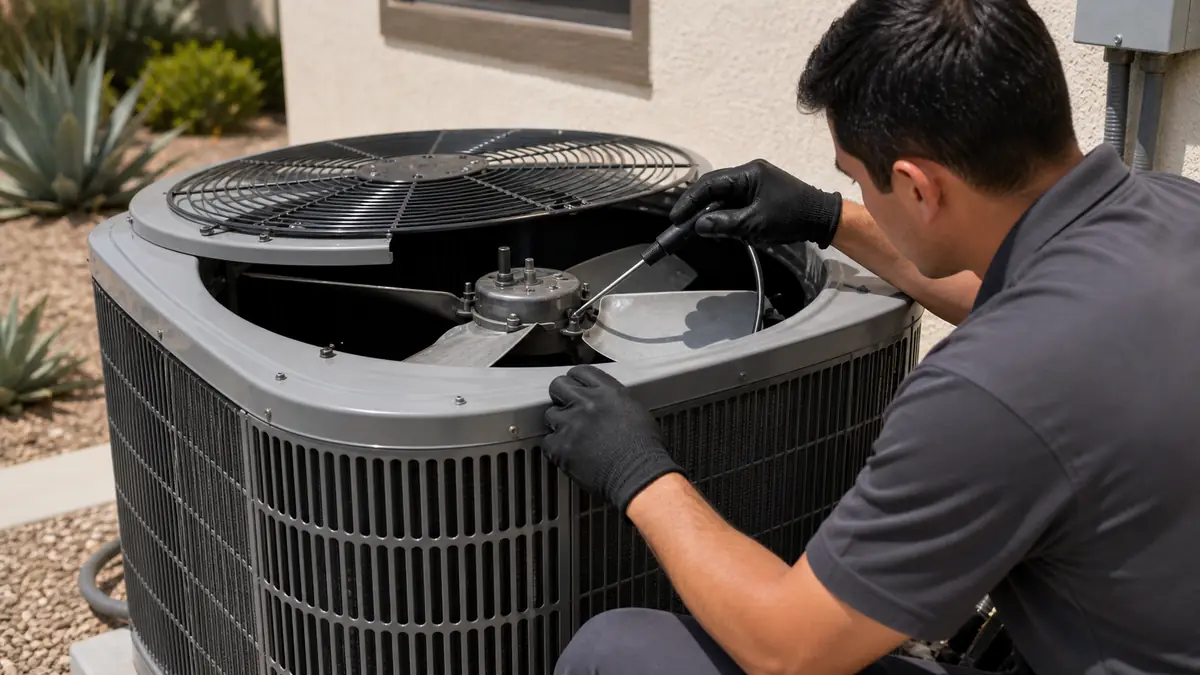
What does each Carrier AC noise mean?
Sound is a useful first diagnosis. A steady electrical buzz with a fan that will not spin is almost always a failed dual-run capacitor or a pitted contactor - the part that gives out first under West Covina's sustained Zone 9 heat. A high-pitched squeal at startup points to a dry condenser fan-motor bearing. A deep clunk or knock from the compressor is the worst case: failing internal components or mounts, often a replacement decision on an older unit. Hissing or gurgling near the service valves suggests a refrigerant leak or a restriction at the TXV. And a rattle is usually the cheapest fix - loose screws on a panel, or gravel and twigs that blew into the condenser from a windy Galster Park afternoon.
| Noise | Likely source / first check | Cost lane |
|---|---|---|
| Buzzing hum, fan dead | Failed capacitor or stuck contactor | $150 - $450 |
| Screech / squeal on start | Worn condenser fan-motor bearing | $250 - $700 |
| Loud clunk or knock from compressor | Failing compressor mounts or internals | $1,200 - $3,500 |
| Rattling / vibrating panels | Loose hardware or debris in the condenser | $95 - $250 |
| Hissing or gurgling at the unit | Refrigerant leak or restriction (TXV) | $225 - $1,500 |
| Grinding from indoor air handler | Blower wheel rubbing or failing ECM motor | $450 - $2,300 |
Which noises mean shut it off now?
Stop running the system if you hear a loud electrical buzzing at the disconnect, a metallic grinding from the indoor air handler, or a hard clunk from the compressor. Buzzing can mean an arcing contactor; grinding can mean the ECM blower wheel is destroying itself; a compressor knock can mean it is seconds from seizing. Cutting power and calling protects the expensive parts. A harmless panel rattle, by contrast, can wait for a scheduled visit.
Why do South Hills estates report inverter noises?
Newer South Hills and Woodside Village estates often run Greenspeed variable-speed condensers, and homeowners sometimes flag a faint electronic whine or hum at low speed that is actually normal inverter operation. The noises to act on there are bearing squeals and rattles, not the modulation hum. If a Greenspeed unit is also throwing a fault, that is a repair question; our South Hills noise page covers the neighborhood specifics, and weak airflow often accompanies noise from a frozen coil.
How we trace a Carrier noise to its part
Sound narrows the diagnosis before a meter ever comes out. We start by locating the noise - outdoor condenser, indoor air handler, or the line set between them - because that alone rules out half the causes. A buzz that tracks with a dead fan sends us straight to the contactor and dual-run capacitor: we kill power, discharge the capacitor, and read its microfarad value against the rating stamped on the can; a cap that reads low or zero is the answer. A startup squeal points us at the condenser fan motor, where we spin the blade by hand to feel for a rough or dry bearing. A deep clunk means we inspect the compressor mounts and listen for internal knock, which on an older unit is often a replacement conversation. Hissing near the service valves sends us to a leak search with an electronic detector and a subcooling check. On a Greenspeed estate system, an electronic whine paired with a 178 or 179 code moves us to the ABCD communication bus and the control boards rather than the mechanicals.
Which noises are safe to investigate yourself?
A rattle is the one homeowners can safely chase: with the system off at the disconnect, you can look for loose screws on a service panel or clear twigs, gravel, and leaves that blew into the condenser from a windy Galster Park afternoon. That clears a real share of rattle calls. Everything else is a stop-and-call: a hard electrical buzz at the disconnect can mean an arcing contactor, a grinding from the air handler can mean the ECM blower wheel is chewing into its housing, and a compressor knock can be seconds from a seizure. Cutting power and calling protects the costly parts - capacitor and fan-motor repairs run $150 to $700, but a destroyed compressor runs $1,200 to $3,500.
Common questions
My Carrier condenser buzzes but the fan does not spin. What is it?
That hum with a dead fan is the signature of a failed dual-run capacitor or a stuck contactor - the most common West Covina summer breakdown. Do not keep cycling it; the compressor can overheat. It is usually a same-visit, $150-$450 fix once we meter the capacitor and contactor.
Why does my AC screech or squeal when it starts?
A high-pitched squeal on startup is often a worn condenser fan-motor bearing or, on some units, belt-driven blower wear. A metallic screech from inside can be the blower wheel rubbing its housing. Both are wear items we can replace; running them risks seizing the motor.
Is a loud rattling or buzzing dangerous?
A loose panel or debris rattle is harmless but annoying. An electrical buzzing at the disconnect or contactor, or a loud clunk from the compressor, is not - shut the system off and call. In dusty Galster Park-adjacent yards, twigs and gravel in the condenser also cause rattles we can clear quickly.