High HVAC Energy Bills in West Covina
Fast answer: Climbing HVAC bills in West Covina usually trace to low refrigerant, a dirty coil, leaky ducts, or an aging low-SEER unit straining through a long Zone 9 summer. Call (213) 277-6575 or book online and West Covina Carrier HVAC pinpoints the waste across Merlinda and 91793 from a $95 visit.
Quick rundown
- Energy-waste diagnosis across 91790, 91791, 91792, 91793.
- Top causes: low refrigerant, dirty condenser coil, leaky/undersized ducts, weak capacitor, aging unit.
- West Covina runs cooling 5-6 months a year, so inefficiency compounds.
- We verify refrigerant charge by subcooling and check current draw at the compressor.
- Duct sealing and a clean coil often cut runtime for a modest cost.
- Replacement math (a SEER2 upgrade) weighed honestly, rebate caveats and all.
- Independent shop.
Why are my cooling bills so high in West Covina?
West Covina's eastern San Gabriel Valley position means 92-96 F July highs and 55-75 days a year above 90 F, so a Carrier system runs hard from late spring into fall. Against that backdrop, small inefficiencies become large bills. Low refrigerant from a slow leak forces the compressor to run longer for less cooling. A condenser coil coated in valley dust and pollen cannot dump heat, so the unit works harder. Leaky attic ducts dump cooled air into a 130 F attic. A tired capacitor makes the motor draw extra current. And an aging 10-12 SEER condenser simply draws more electricity than a modern 14.3+ SEER2 unit would to deliver the same comfort.
| Symptom | Likely cause / first check | Cost lane |
|---|---|---|
| Bill up, weak cooling, long runs | Low refrigerant (leak) or dirty condenser coil | $225 - $1,500 |
| Bill up, some rooms never cool | Leaky/undersized ducts wasting conditioned air | $300 - $3,000 |
| High draw, frequent breaker trips | Weak capacitor or failing compressor straining | $150 - $3,500 |
| Runs constantly, short cycles | Oversized or wrong-sized unit; thermostat/staging | $150 - replace |
| Old unit, rising repair costs | Aging low-SEER condenser; consider replacement | $5,000 - $16,500 |
Which fixes give the fastest payback?
The cheap, high-return moves come first: a fresh filter, a cleaned condenser and evaporator coil, a verified refrigerant charge, and sealed ducts so you stop paying to cool the attic. Those often shave meaningful runtime for a few hundred dollars. A smart thermostat with scheduling helps too - see thermostat setup. We do the inexpensive diagnostics before suggesting anything big.
When does an efficiency upgrade pay off?
Once your condenser is beyond 12-14 years, low-SEER, and beginning to need repairs, the energy a modern system saves folds into the replacement math. Whether it is a variable-speed Greenspeed system in a large South Hills estate or a right-sized 14.3+ SEER2 unit in a tract home, both trim the Zone 9 cooling bill. We weigh it honestly - with the caveat that rebate amounts move in phases and that the federal 25C credit expired 12/31/2025 - in the repair-or-replace guide and buying guide.
How we find where the energy is going
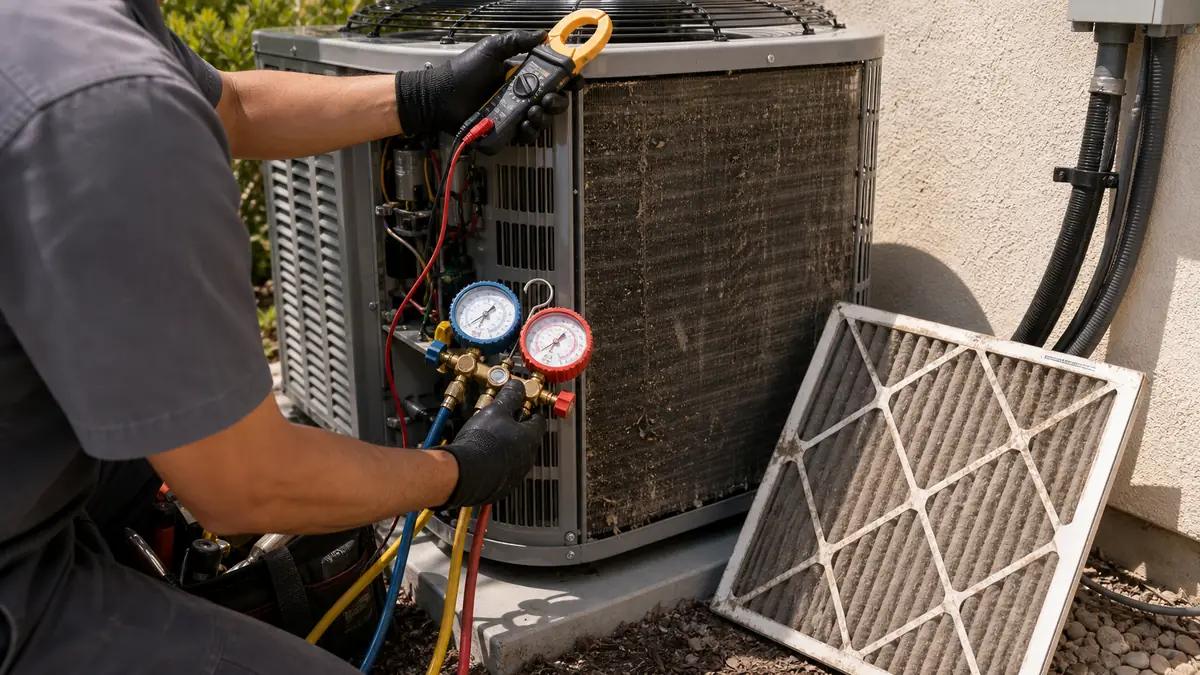
A high bill is a symptom, so we measure rather than guess. We start at the condenser with a clamp meter, reading the compressor's running amperage against the RLA (rated load amps) on the data plate; a draw running high points to a weak capacitor, a dirty coil, or a struggling compressor. Next we verify refrigerant charge by subcooling - an undercharged system from a slow leak runs long and hot for less cooling, which is pure wasted runtime. We pull and inspect both coils, since a condenser caked in eastern San Gabriel Valley dust and pollen cannot reject heat. Then we read total external static pressure and check the ducts; leaky attic supply runs in a 130 F West Covina attic can dump 20 to 30 percent of your conditioned air before it reaches a register. Finally we note the unit's age and SEER rating, because a 2000s-era 10-12 SEER condenser is simply burning more power than a current 14.3+ SEER2 unit would for the identical comfort.
What do the fixes cost, and what do they save?
The order matters because the cheapest fixes often return the most. A fresh filter and a professional coil cleaning with a verified charge land in the low hundreds and frequently cut noticeable runtime. Duct sealing runs roughly $300 to $3,000 depending on access and how much HERS-verified work Zone 9 triggers, and it stops you paying to cool the attic. A failing capacitor is a $150 to $450 repair that can quietly inflate compressor draw until it is replaced. Those targeted repairs come first. Only when the condenser is past 12-14 years, low-SEER, and stacking up repairs does the replacement math turn favorable - and even then we weigh it against the live, shifting rebate picture rather than promising a number.
Common questions
Why did my SCE bill spike this summer in West Covina?
Beyond rate changes, a climbing cooling bill usually means your Carrier system is working harder than it should: low refrigerant, a dirty condenser coil, leaky attic ducts, or a failing capacitor making the compressor draw extra current. In Zone 9, where the system runs 5-6 months a year, small inefficiencies add up fast.
Can a dirty coil really raise my bill that much?
Yes. A condenser coil caked with the dust and pollen common in the eastern San Gabriel Valley cannot reject heat efficiently, so the compressor runs longer and hotter to hit the same temperature. Cleaning the coil and verifying refrigerant charge often trims runtime noticeably for a modest service cost.
Is my old AC just too inefficient to keep?
It may be. A single-stage condenser past 14 years and rated at 10-12 SEER burns far more power than a current 14.3+ SEER2 unit, and far more again than a variable-speed Greenspeed system. When the repairs keep stacking up and the unit is well past its prime, the energy savings can tip the case toward replacement - and we run those numbers honestly.