HVAC Sizing and Manual J in West Covina
Fast answer: Sizing a Carrier system in West Covina rests on a Manual J load calculation, not square footage, fixing the right tonnage for your Zone 9 home from a Merlinda tract house to a South Hills estate. Call (213) 277-6575 or book online and West Covina Carrier HVAC right-sizes every install. Last updated 2026-06-13.
Quick rundown
- Manual J is the industry's room-by-room load-calculation standard.
- Sizing right beats sizing big - oversized units short-cycle and cool unevenly.
- Inputs: floor area, insulation, window area and orientation, climate, ducts, ceiling volume.
- West Covina's Zone 9 inland design temperature drives a high peak cooling load.
- Ducts are part of the calc: leaky or undersized runs cap deliverable airflow.
- Right sizing goes hand in hand with Title-24 charge/airflow and HERS duct verification.
- Sizing is free with our install quotes - we never guess tonnage.
What is Manual J and why does it matter in West Covina?
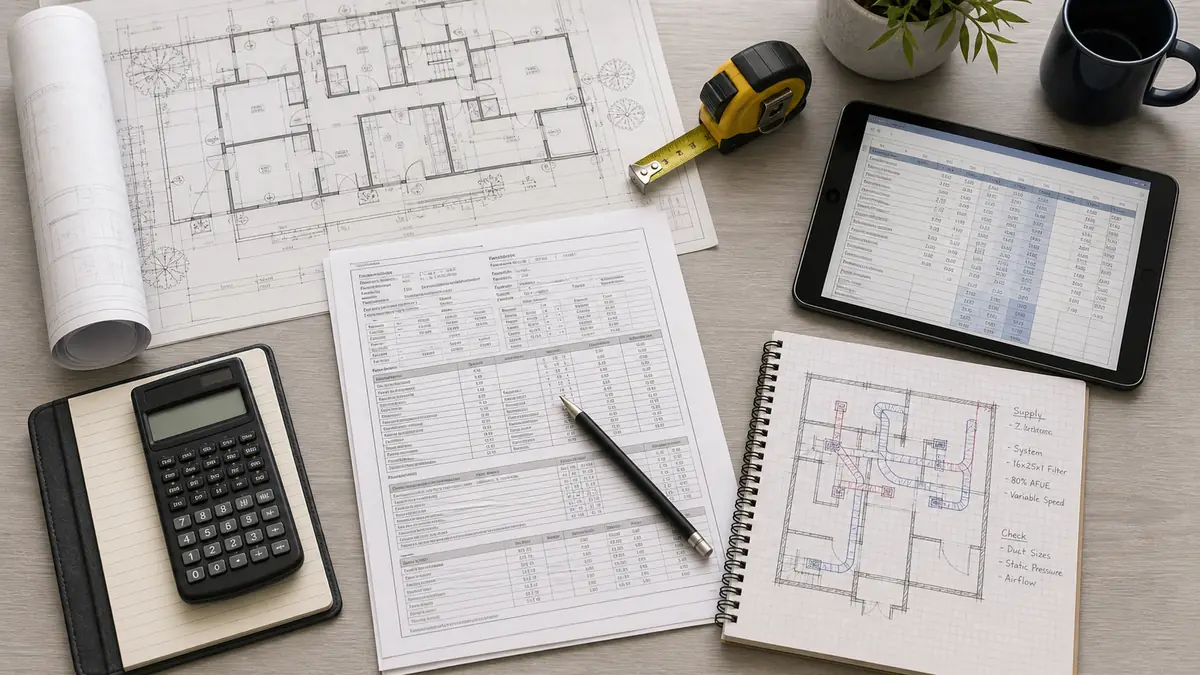
Manual J is the ACCA method for working out a home's heating and cooling load one room at a time, weighing the building envelope, the windows, air infiltration, and the local design temperature. It carries weight in West Covina precisely because the housing divides so sharply: a single square-footage rule of thumb that roughly suits a 1,400 sq ft Galaxie ranch gets a 3,800 sq ft South Hills estate - vaulted ceilings, a wall of west-facing glass - badly wrong. An honest calc reads those differences. It also undoes history, since many 1960s tract systems went in oversized and decades of added insulation and dual-pane windows have since pulled the real load down, so copying the old tonnage simply carries the mistake forward.
| Factor | Effect on load | West Covina note |
|---|---|---|
| Conditioned floor area | Bigger load with more area | Estate vs compact tract |
| Insulation and air sealing | Better envelope cuts the load | 1960s tracts often under-insulated |
| Window area and orientation | West/south glass adds heat gain | South Hills west-facing views |
| Climate design temperature | Zone 9 inland design ~ high 90s F | Sets peak cooling demand |
| Duct condition and location | Leaky attic ducts add load | Affects deliverable airflow |
| Ceiling height / volume | Vaulted ceilings raise volume | Estate great rooms |
Why is an oversized unit worse than a right-sized one?
It runs against instinct, but more capacity is not better. An oversized air conditioner drives the air to the thermostat setpoint fast and then quits - a short cycle. The catch is that comfort is more than temperature: the system has to run a sustained stretch to draw humidity out and carry conditioned air to the distant rooms. Let a short-cycling unit loose in a two-story Woodside Village home and the downstairs turns cold and clammy while the upstairs stays warm, all while the repeated starts grind on the compressor and contactor and nudge the bill higher. Size it right and the unit settles into longer, gentler cycles that level out temperature and dehumidify the way they should. On a variable-speed Greenspeed system the oversizing penalty bites harder still, because the unit seldom eases down into its efficient low-modulation band - you pay for the feature and never get to use it.
How do ducts factor into sizing?
Sizing the equipment is only half the job; the ducts have to deliver the airflow the calc assumes. In West Covina's older tracts the original ducts are frequently undersized and leaky, so a perfectly sized condenser still underperforms because the air cannot get to the rooms. We evaluate the duct system as part of the design - measuring static pressure and checking return sizing - and where needed we fold duct repair and sealing into the plan. Inside Zone 9 that duct work generally sets off HERS field verification, so it belongs in the quote from day one rather than arriving as a later surprise.
A worked Manual J for a West Covina tract home
Here is how the calc reads a real envelope. Take a 1,500 sq ft single-story Merlinda ranch: about 1,500 sq ft of conditioned floor, R-19 attic insulation, dual-pane windows totaling roughly 220 sq ft with a chunk facing west, average air sealing, and a Zone 9 cooling design temperature in the high 90s F. Run through Manual J, that envelope returns a sensible cooling load near 28,000 to 32,000 BTU - a 2.5-ton system. The old square-footage rule of one ton per 500 sq ft would have called for 3 tons, and a contractor "rounding up for the heat" might have hung a 3.5-ton unit. That half-to-full ton of excess is exactly what makes a system short-cycle in a small, tight house.
Now change one input: strip the attic back to the original 1960s R-7 and add up west glass on an un-shaded elevation, and the same footprint can climb past 36,000 BTU - a real 3-ton load. That is why two identical-looking Galaxie ranches on the same street can correctly take different tonnage. The calc reads the house in front of it, not the house next door.
| Input | This home | Effect on the load |
|---|---|---|
| Conditioned area | 1,500 sq ft | Baseline load driver |
| Attic insulation | R-19 (re-done) | Lowers load vs original R-7 |
| Window area / orientation | ~220 sq ft, some west | West glass adds afternoon gain |
| Design temperature | High-90s F (Zone 9) | Sets the peak demand |
| Resulting load | ~28,000-32,000 BTU | 2.5-ton system |
What is the oversizing failure chain?
Oversizing does not fail all at once; it fails in a chain. The unit reaches the thermostat setpoint quickly and shuts off - a short cycle. Because it never runs a sustained stretch, the indoor coil never gets cold enough long enough to pull humidity out, so the air feels cool but clammy. The far rooms, which need a long run to receive their share of conditioned air, stay warm, so you drop the setpoint to chase them, which only makes the short cycles more frequent. Each restart hits the compressor and contactor with inrush current, so those wear items fatigue early - the same capacitor and contactor failures that already dominate West Covina summer calls, arriving sooner. And on a variable-speed Greenspeed system the penalty compounds, because an oversized unit rarely settles into its efficient low-modulation band, so you paid for a feature the house never lets it use. Right-sizing breaks the chain at the source: longer, gentler cycles that dehumidify, reach the back bedrooms, and spare the hardware.
What sizing mistakes do we see most in West Covina?
Three errors recur across the city. The first is matching the old tonnage: a 1960s Galaxie or Vincent tract system that was rule-of-thumb oversized when the house had R-7 attic insulation gets copied onto a home that now has R-30 and dual-pane glass, so the new unit is oversized for a load that has dropped. The second is "rounding up for the heat" - adding a half-ton because Zone 9 runs hot - which sounds prudent but produces exactly the short-cycling and clammy comfort that homeowners then blame on the equipment. The third is sizing the condenser correctly while ignoring the ducts, so a right-sized unit still cannot deliver its airflow through undersized returns and leaky attic runs. We avoid all three by running the calc on the home as it stands today, checking the duct system as part of the design, and right-sizing rather than padding. The goal is a unit that runs long, steady cycles - not the biggest number that fits the pad.
How does sizing connect to choosing a Carrier system?
The load number from the Manual J calc points directly to the right Carrier tier and tonnage. A modest, well-sealed tract load is a clean fit for a single-stage Comfort unit; a larger load with comfort priorities suits a two-stage Performance system; and a big, uneven estate load justifies a variable-speed Infinity Greenspeed unit that can modulate down. From there the buying guide covers efficiency and rebates, and the installation page covers the build. Sizing is the step that makes everything downstream work.
Common questions
Why not just match the tonnage of my old West Covina unit?
Two reasons: the old unit might have been mis-sized to begin with, and the house has likely changed underneath it. Plenty of 1960s tract systems were sized by rule of thumb and ran oversized, and owners have since added insulation, dual-pane windows, or floor area. A Manual J calc reads the load the home carries today, so a sizing error from forty years back does not follow you forward.
What happens if my Carrier AC is oversized?
It short-cycles - the unit hits the thermostat setpoint in a hurry, cuts off, and never stays on long enough to wring out humidity or even out the far rooms. In a two-story West Covina home that reads as a chilly living room and a warm upstairs, with extra wear from constant restarts and a steeper bill on top. Right-sizing settles comfort and equipment life together.
Does sizing affect Title-24 compliance here?
Sizing is a design exercise, but the install that follows it sets off Title-24 verification in Zone 9 - refrigerant-charge and airflow checks on the new system, and HERS field-verified duct sealing across most duct work. Good sizing also presumes the ducts can move the airflow it calls for, which is why we look them over as part of the calc.
How many tons does my West Covina house need?
There is no clean square-footage answer, which is the point of a Manual J. As loose orientation only, a tight 1,400 sq ft Galaxie tract home often lands near 2.5 to 3 tons and a 3,600 sq ft South Hills estate near 4 to 5 tons - but west glass, attic insulation, ceiling height, and duct leakage move those numbers a half-ton either way. We run the calc rather than guess, because a half-ton of oversizing is enough to start short-cycling.
What is the 'rule of thumb' and why is it wrong here?
The old rule is roughly one ton per 400-600 sq ft, and it fails in West Covina because it ignores the things that actually drive load: Zone 9's high-90s design temperature, west-facing estate glass, attic insulation levels that vary wildly between a re-done Galaxie ranch and an untouched one, and duct leakage into a 130 F attic. A rule of thumb can be a ton off in either direction - oversizing the tight homes and undersizing the leaky ones.
Can the right size fix my hot upstairs?
Sizing helps, but a hot upstairs in a two-story Woodside Village or South Hills home is usually a distribution problem as much as a capacity one. A correctly sized variable-speed system that runs longer, gentler cycles moves more even air, and zoning or a dedicated upstairs return often finishes the job. We diagnose which of those - capacity, ducts, zoning, or some combination - your home actually needs rather than just selling a bigger condenser, and we measure the upstairs return and static pressure before recommending anything. A bigger unit alone usually makes a hot upstairs worse, not better, because it short-cycles before the far rooms ever catch up.